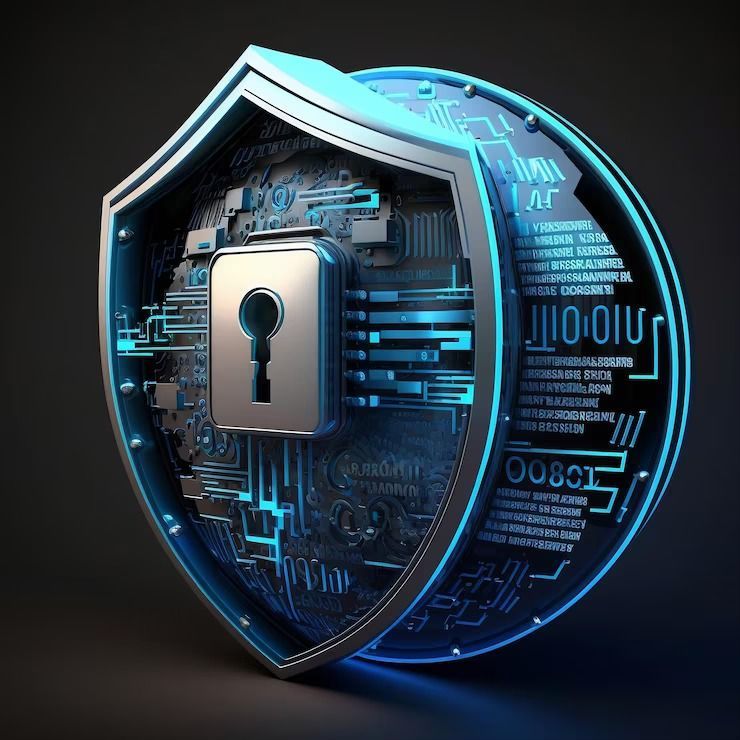
For more than two decades, our digital world has been built on a silent, invisible fortress. This fortress is the encryption that protects our bank accounts, our private messages, our e-commerce transactions, and our nation’s most sensitive secrets. Technologies like RSA and Elliptic Curve Cryptography (ECC) have been the unbreachable walls of this fortress, the mathematical bedrock of modern security. But a new kind of weapon is being forged, one that threatens to turn these walls to dust. This weapon is the quantum computer.
As of late 2025, the race is no longer just to build a functional, large-scale quantum computer. The race is now to deploy a new generation of defenses before that weapon is fully operational. We are in a high-stakes, clandestine arms race for data. The threat is so profound it has a name: the “Quantum Apocalypse.” It signifies a moment when the entire digital security infrastructure that underpins our global economy becomes instantly obsolete.
In response, the world’s leading cryptographers, governments, and corporations have been in a desperate sprint to create the next generation of “unbreakable” encryption. This is the story of that defense: a multi-pronged revolution in mathematics and physics known as Post-Quantum Cryptography (PQC), Quantum Key Distribution (QKD), and Fully Homomorphic Encryption (FHE). This is not just a software update; it is the re-engineering of digital trust for a new era.
The Impending Storm: Why Our Encryption is Broken
To understand the solution, one must first grasp the elegant, simple, and catastrophic nature of the problem.
Our current security relies on a simple mathematical “trap door.” It’s easy to multiply two massive prime numbers together, but it is computationally impossible for a classical computer to take that resulting giant number and figure out the two original primes. This is the foundation of RSA encryption. A classical computer, even the world’s fastest supercomputer, would take thousands or even millions of years to break a single 2048-bit encryption key.
This is not a difficult task for a quantum computer. It is a trivial one.
In 1994, a mathematician named Peter Shor developed what is now known as Shor’s Algorithm. This algorithm, designed to run on a hypothetical quantum computer, can find the prime factors of a massive number with breathtaking speed—not in millennia, but in hours or even minutes.
For decades, this was a purely theoretical threat. But as of 2025, the quantum computers being built by state-level actors and corporate giants are rapidly scaling. The question is no longer “if” they will be able to run Shor’s Algorithm, but “when.”
This has created a terrifying new threat known as “Harvest Now, Decrypt Later” (HNDL). Malicious actors and state-sponsored intelligence agencies are known to be siphoning and storing massive amounts of encrypted data today—our encrypted emails, financial transactions, and government secrets. They cannot read this data now. But they are hoarding it, waiting for the day the first quantum computer is turned on. On that day, every secret they have collected will be cracked wide open.
This is why the development of a new “unbreakable” standard is the single most urgent task in cybersecurity today.
The Primary Shield (Post-Quantum Cryptography – PQC)
The first and most critical line of defense is Post-Quantum Cryptography (PQC). It is also the most misunderstood.
PQC is not encryption that uses quantum computers. On the contrary, PQC is a new generation of classical encryption algorithms that are designed to be secure against attacks from both classical computers and quantum computers.
The goal was to find new mathematical problems that are just as hard for a quantum computer as prime factorization is for a classical one. After a decade of research, the global cryptographic community, led by the U.S. National Institute of Standards and Technology (NIST), has found several.
In 2024, NIST finalized its first set of standardized PQC algorithms, chosen from a multi-year global competition. These new “unbreakable” standards fall into several families.
A. Lattice-based Cryptography (The New Champion)
This is the clear winner of the NIST competition and the foundation of our quantum-proof future. The standardized algorithms—CRYSTALS-Kyber (for key establishment) and CRYSTALS-Dilithium (for digital signatures)—are based on this.
- How it Works: Imagine a vast, seemingly infinite grid of points (a “lattice”) in hundreds of dimensions. The mathematical problem is to find the closest point in this lattice to another random point. This “closest vector problem” is simple to state but astronomically difficult to solve, even for a quantum computer.
- Why it Won: It offers the best balance of high security, small key sizes (compared to other PQC methods), and high performance. It is efficient enough to run on everything from massive servers to smaller devices, making it a viable replacement for RSA and ECC.
B. Hash-based Cryptography (The Trustworthy Veteran)
This approach relies on the security of cryptographic hash functions (like SHA-256), which are already believed to be quantum-resistant.
- How it Works: The primary standard here is SPHINCS+. It uses hash functions to build a massive tree structure (a Merkle tree) to create a digital signature.
- Why it’s Used: Its security is extremely well-understood and relies on minimal assumptions. Its main drawback is that the signatures are larger and the process can be “stateful,” meaning a key can only be used a finite number of times, though SPHINCS+ solves this by being stateless. It is seen as a highly reliable, if slightly less versatile, alternative for digital signatures.
C. Other Contenders
Other families of mathematics, such as code-based cryptography (like the classic McEliece algorithm) and multivariate cryptography, were also deep contenders. While not all were chosen in the first round of standardization, they remain viable and demonstrate the robust health of the PQC field. There is no single “magic bullet,” but rather a new toolbox of quantum-resistant tools.
The transition to these new PQC standards has already begun. This is the great cryptographic migration, often called “Y2Q” (Year to Quantum). Every piece of software, every hardware chip, and every line of code that uses encryption must be audited and updated.
The Physics-Based Lock (Quantum Key Distribution – QKD)
While PQC is a mathematical defense (a new, harder lock), the second part of the revolution is a physical defense (a lock that tells you it’s being picked). This is Quantum Key Distribution (QKD).
QKD is true quantum cryptography. It does not encrypt the data itself. Instead, it provides a provably secure way to exchange the secret keys that are used for encryption.
A. How it Works (The Observer Effect)
QKD leverages a fundamental law of quantum physics: the act of observing a quantum particle (like a photon) unavoidably changes it.
- Sending the Key: “Alice” sends a secret key to “Bob” by encoding it on a stream of single photons.
- The Eavesdropper: If an eavesdropper, “Eve,” tries to intercept and read these photons to steal the key, the very act of her measuring them changes their quantum state.
- Detecting the Breach: Bob and Alice can then publicly compare a small portion of their key. If they find discrepancies, they know for a fact that someone was listening in. They discard the key and send a new one.
B. Provably Unbreakable Exchange
The security of QKD is not based on a difficult math problem; it is based on the laws of physics. No amount of computing power, not even an infinitely powerful quantum computer, can break this, because it’s impossible to “spy” on the key exchange without being detected.
C. The Limitations
QKD is not a silver bullet. It is expensive, requires dedicated fiber optic hardware (or line-of-sight laser), and is currently limited by distance (though quantum repeaters are in development). It is not a replacement for PQC but a complementary, ultra-high-security layer. It is already being deployed in high-value environments like banking networks, government communications, and data centers.
The Holy Grail (Fully Homomorphic Encryption – FHE)
The final piece of the “unbreakable” puzzle is a concept so powerful it borders on magic: Fully Homomorphic Encryption (FHE).
For decades, encryption had a fundamental weakness: to actually use your data (analyze it, perform a calculation, run a search), you had to decrypt it first. That moment of decryption, even if it happens inside a secure server, is the moment of greatest vulnerability.
FHE solves this. It is a form of encryption that allows a computer to perform complex mathematical operations directly on encrypted data without ever decrypting it.
A. The “Magic Glovebox” Analogy
Imagine your sensitive data is inside a completely sealed, locked, transparent box. You want a third party (like a cloud server) to perform a task on that data.
- Old Way: You give them the key. They unlock the box, perform the task, put the data back, and re-lock it. You have to trust they didn’t peek or steal a copy.
- FHE Way: You give them the locked box. They use special “glove ports” (homomorphic encryption) to manipulate the data inside the locked box. They perform the entire calculation—sorting a spreadsheet, training an AI model, analyzing medical data—while the data remains fully encrypted. They then hand the locked box back to you. Only you, with your private key, can open it and see the result. The cloud server never, ever sees your raw data.
B. The Impact on Security
The implications are staggering.
- Cloud Computing: You can use the full power of cloud servers for AI, data analytics, and storage with zero trust. The cloud provider simply cannot access your information.
- Data Privacy: This is the ultimate tool for privacy. Hospitals could share encrypted patient data for massive medical studies without ever exposing a single patient’s identity.
- The Unbreakable Future: When you combine a quantum-resistant PQC algorithm with an FHE scheme, you create a truly formidable defense. The data is encrypted with a key that is quantum-proof, and it never needs to be decrypted in a vulnerable environment.
Until recently, FHE was prohibitively slow. But breakthroughs in algorithms and dedicated hardware accelerators in the mid-2020s have made it commercially viable. We are now seeing the first wave of FHE-powered platforms for privacy-preserving cloud services.
The New Arms Race: Our Unbreakable Future
The concept of “unbreakable” encryption is a moving target. But as of late 2025, the future of security is no longer a single, magical algorithm. It is a new, multi-layered defense strategy.
- Post-Quantum Cryptography (PQC) will become the new baseline for all our software, websites, and communications, replacing RSA and ECC with its quantum-resistant mathematics.
- Quantum Key Distribution (QKD) will serve as the ultra-secure “armored truck” for exchanging the most critical keys between high-value targets like governments and banks.
- Fully Homomorphic Encryption (FHE) will revolutionize the cloud, creating a new paradigm of “zero-trust” computation where privacy is absolute.
Conclusion
This is the most significant upgrade in the history of digital security. The challenge we now face is not invention, but implementation. The “Quantum Apocalypse” is a deadline. The “Y2Q” migration to replace every line of vulnerable code on Earth is the race against that clock. The encryption of tomorrow is here; the task of deploying it has just begun.